A couch is where real life lands: coffee during an early meeting, juice after school, a glass of red during movie night, and muddy paw prints when the weather turns. The best way to protect couch fabric from spills is not to ban snacks from the living room. It is to prepare the fabric before trouble arrives, then know exactly what to do in the first few minutes after a spill.
That approach keeps upholstery looking cared for without filling your home with harsh fumes or relying on aggressive cleaners that may create a new problem while trying to solve the old one.
Why couch spills become stains
Most spills are manageable when they stay on the surface. They become a bigger job when liquid sinks through the fibres, reaches the cushion filling, or dries before anyone notices it. Once that happens, colourants, oils, sugars, proteins, or tannins can bind to the fabric and leave a ring, a stiff patch, or a lingering odour.
Fabric type changes the odds. Tightly woven synthetic upholstery often gives you more time to blot up a drink than loose, absorbent natural fibres. Velvet, chenille, linen, wool, and heavily textured fabrics need a gentler hand because rubbing can distort the pile or spread colour. Microfibre can be wonderfully practical, but it still needs the right cleaning approach for its care code.
The goal is not to make a couch invincible. No treatment can guarantee that a full cup of coffee, greasy pizza sauce, or pet accident will vanish without effort. Good protection buys time, reduces absorption, and makes the first response more effective.
Start with the fabric care code
Before applying a protector or spot cleaner, find the manufacturer tag under the cushions. The code tells you which cleaning methods are safest for that particular upholstery.
A W code generally permits water-based cleaning methods. S means solvent-based products only. WS indicates that either method may be suitable, while X means vacuuming or professional cleaning only. If the tag is missing, check the manufacturer information or test any product on an inconspicuous area first.
This small check matters. A perfectly good cleaner can leave a water mark, colour change, or texture issue when used on the wrong fabric. Protection should preserve the couch, not turn a small spill into a bigger repair.
Use a fabric protector before the first spill
A quality upholstery protector forms a barrier that helps liquids bead up or sit closer to the surface instead of immediately soaking in. That extra time is what lets you blot a spill away before it works its way into the cushion.
Choose a protector designed specifically for upholstery, not one intended for shoes, outdoor gear, or hard surfaces. Look for a formula that is compatible with your fabric and your household priorities. For homes with children, pets, or anyone sensitive to strong scents, a non-toxic, naturally sourced, biodegradable option is a far more comfortable choice than an overpowering solvent-heavy spray.
BCM Biodegradable Solutions’ Fabric Defender is made for this practical job: helping protect upholstery while keeping the product choice gentler for the home environment.
Apply protectors to a clean, dry couch in a well-ventilated area. Use even coverage rather than soaking one section, and allow the fabric to dry fully before anyone uses the furniture. Always follow the product directions and test a hidden spot first, especially on richly dyed, delicate, or vintage upholstery.
Protection is not permanent. High-use spots such as armrests, seat cushions, and the favourite family corner wear faster than the back cushions. Reapply based on the product instructions and after a deep clean. If water stops beading on the surface, it is a good sign the barrier needs refreshing.
The first five minutes after a spill
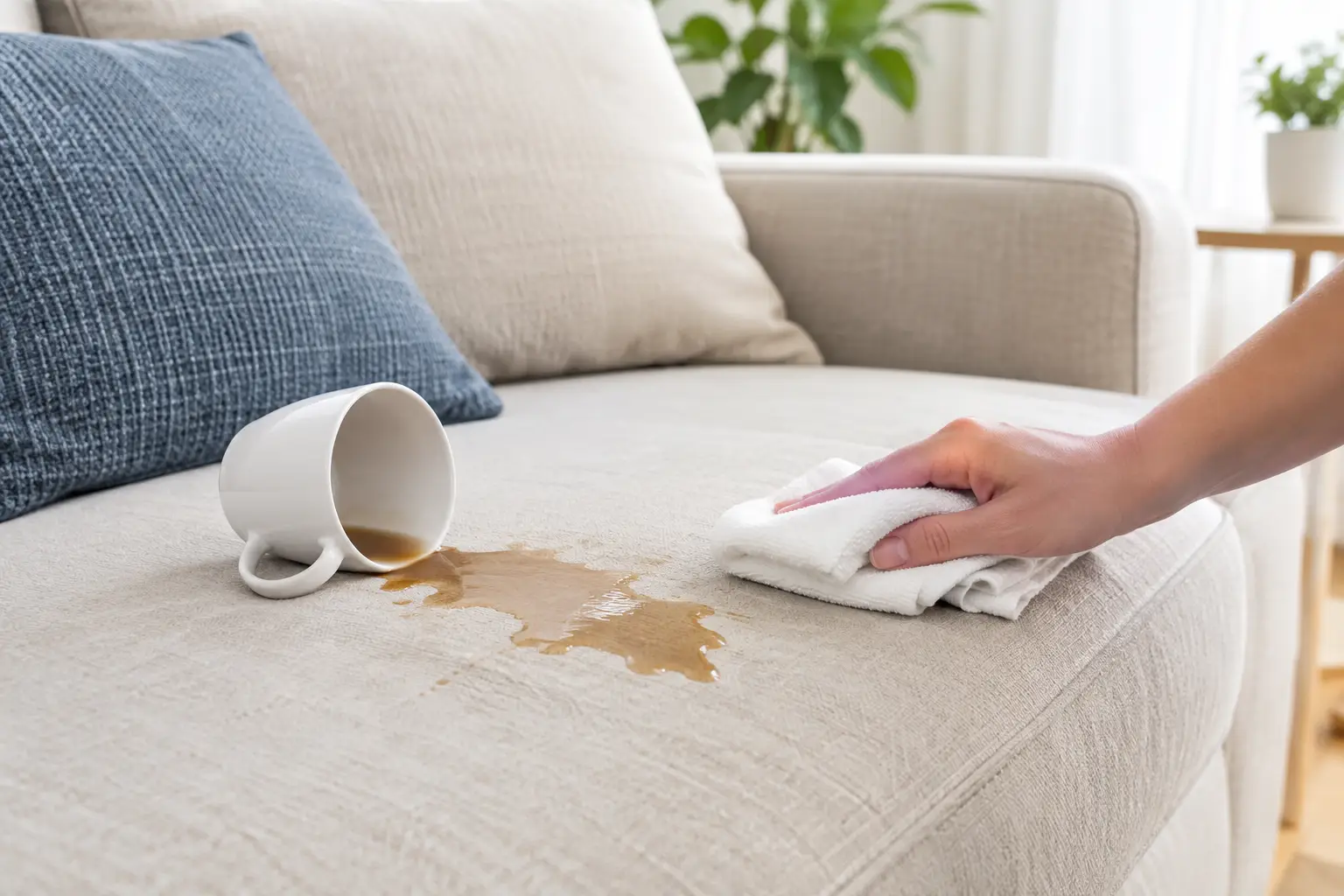
Speed matters, but panic does not help. Rubbing is the most common mistake because it pushes liquid deeper into the weave and can make a stain spread outward. Instead, work calmly from the outside of the spill toward the centre.
For most fresh liquid spills, follow these four steps:
- Lift any solids with a spoon or dull edge without pressing them into the fabric.
- Blot with a clean white cloth or plain paper towel until it stops picking up moisture.
- Use only the cleaner or method approved for your couch’s care code, after a patch test.
- Blot again with a dry cloth and let the area air-dry completely before judging the result.
White cloths are worth keeping nearby because coloured towels can transfer dye onto damp upholstery. Use a light touch and change to a fresh section of cloth as it becomes wet. Pressing hard does not remove a spill faster. It usually sends it deeper.
For a water-based drink on W or WS fabric, a lightly dampened cloth may be enough after blotting. For greasy food, makeup, or an unknown stain, the safest route depends on the fabric code and the cleaner directions. More product is not automatically better. Oversaturating a cushion can leave a water ring, slow drying, or mildew concerns if moisture reaches the foam.
Build spill prevention into everyday life
The easiest couch stain to remove is the one that never reaches the upholstery. That does not mean covering every cushion in plastic or treating the living room like a museum. A few realistic habits can make a noticeable difference.
Use washable throws on the seats where kids, pets, and snack plates usually gather. Choose throws that are easy to toss in the laundry, and keep a second one ready while the first is being washed. Removable cushion covers, if your couch has them, are another advantage worth using rather than saving for a special occasion.
Place side tables within reach of the spots where people sit. A stable place for a mug eliminates many balancing acts on a soft armrest. For households with young children, lidded cups and snack bowls are not glamorous, but they are remarkably effective.
Pet routines matter too. Keep a towel by the door during wet months, and clean paws before they head for the couch. If a pet has a favourite seat, a fitted washable cover can protect the fabric without changing how the room feels.
Match your response to the spill
Not every stain should be handled the same way. Coffee and tea can leave tannin marks. Red wine and berries bring strong dyes. Milk, pet accidents, and food spills can create odours if moisture remains in the cushion. Oil-based stains need a treatment suited to the fabric code rather than repeated applications of water.
If a spill has dried, resist the urge to attack it with a random household mixture. Vinegar, dish soap, baking soda, and hot water all have their fans, but the wrong combination can set a stain, leave residue, or alter the fabric’s feel. Start with the furniture maker’s instructions and a product made for the stain type and upholstery material.
When a stain covers a large area, has reached the cushion filling, or involves delicate fabric, professional upholstery cleaning may be the sensible call. That is not failure. It is a way to protect an expensive piece of furniture from repeated DIY attempts.
Keep a small couch-care kit nearby
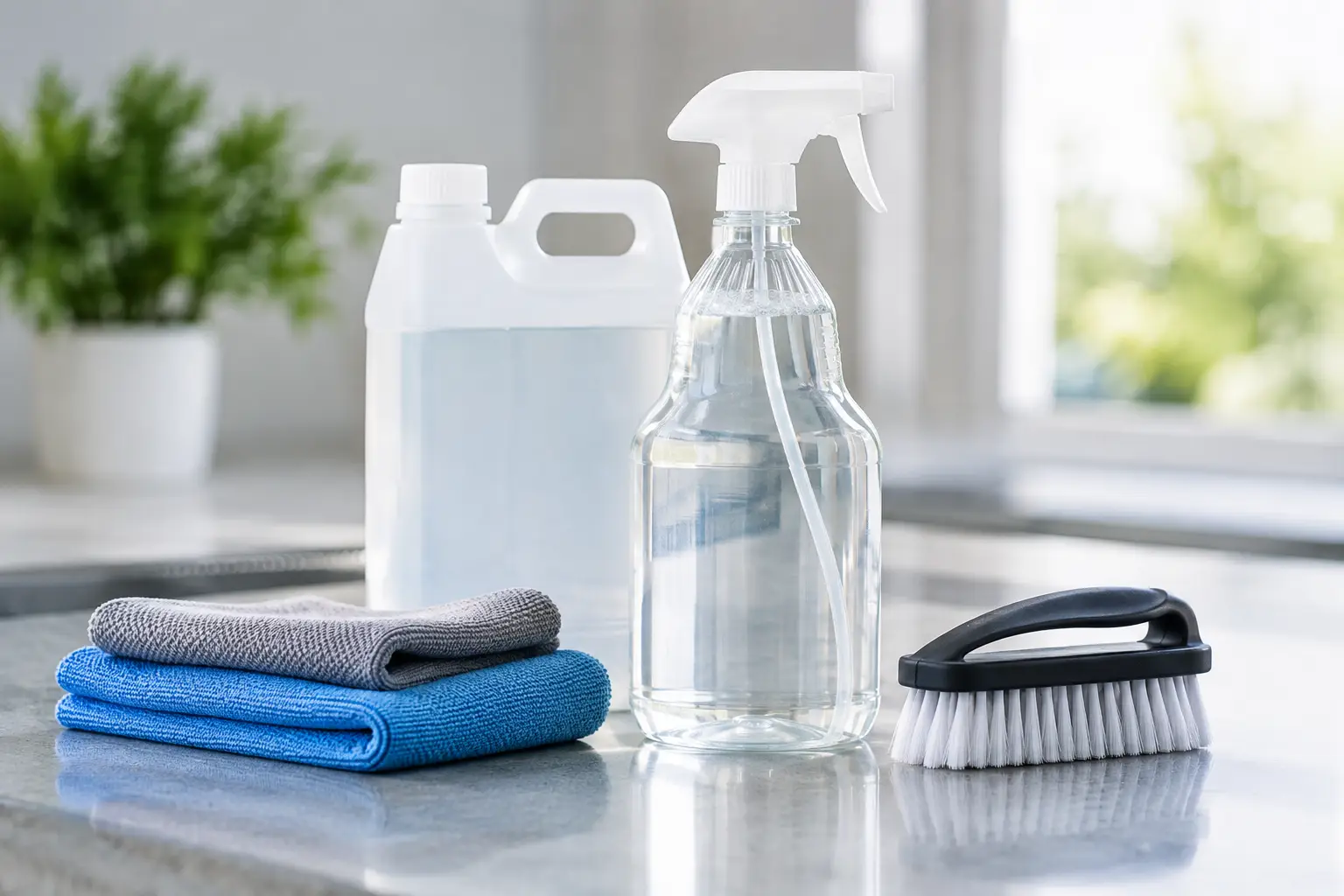
A practical kit does not need to take over a cupboard. Keep clean white cloths, paper towels, a soft brush or vacuum attachment, a spoon for lifting solids, and the approved upholstery products in one place. When a spill happens, having the basics ready prevents the frantic search that gives stains time to set.
Vacuum your couch regularly as well. Dust, crumbs, and pet hair can grind into fabric and make spot-cleaning less even. A clean surface also allows fabric protection to do its job more consistently.
A lived-in couch will collect the occasional mark. That is part of being the comfortable centre of a busy home. With a suitable fabric protector, quick blotting, and a gentler cleaning plan, you can welcome the movie nights, pets, and everyday messes without treating every dropped drink like a furniture emergency.