A stubborn price label on a glass jar, greasy fingerprints around a vehicle door handle, old tape residue on a boat – these are the moments when people reach for a powerful cleaner. The catch is that many conventional solvents bring sharp petroleum odours, harsh fumes and a real fire concern into the job. Nonflammable cleaning solvents are designed to change that equation: serious cleaning action without turning a simple cleanup into a ventilation project.
For Canadian households, garages, workshops and workspaces, that difference is practical. A safer solvent can make it easier to clean near appliances, in enclosed spaces, around fabrics and on the everyday surfaces that make up a busy home. But nonflammable is not a magic word. The right formula still has to match the mess, the material and the way you plan to use it.
What makes a cleaning solvent nonflammable?
A solvent is the working ingredient that helps loosen, dissolve or lift another substance. It may tackle adhesive, grease, wax, ink, sap or oily residue that water alone cannot budge. Traditional solvent cleaners often rely on petroleum-based ingredients that evaporate quickly and may release flammable vapours.
Nonflammable cleaning solvents are formulated so they do not ignite under normal use and storage conditions specified by the manufacturer. That can reduce a major hazard when cleaning in a garage, laundry room, basement, vehicle interior or maintenance area. It also means fewer worries about an accidental spark from a pilot light, power tool or nearby equipment.
Still, read the product label and safety information rather than assuming every low-odour cleaner is nonflammable. “Non-toxic,” “natural” and “biodegradable” describe different qualities. A formula can be pleasant to use and environmentally considerate, yet still have handling instructions that matter. Use cleaners as directed, keep them out of children’s reach, and do not mix products unless the label specifically says it is safe.
Why lower fire risk matters during real cleaning jobs
Cleaning rarely happens in a laboratory. It happens while a car is parked in the garage, while a family is cooking dinner, or while someone is trying to remove decals from a canoe before the weekend. The safest product is the one that solves the problem without adding a new one.
A nonflammable solvent is especially useful where vapours could collect or where ignition sources are difficult to avoid. Think of adhesive residue on workshop equipment, grease on outdoor furniture, tape marks on painted surfaces, or old label glue on storage containers. The ability to work on the mess without filling the area with solvent smell is a welcome improvement too.
That said, fire safety is only one part of the decision. A formula can be nonflammable yet too aggressive for a delicate finish, leather, untreated wood or some plastics. Good cleaning is not about choosing the strongest product on the shelf. It is about choosing the product that releases the unwanted residue while leaving the surface in good condition.
Match the solvent to the mess
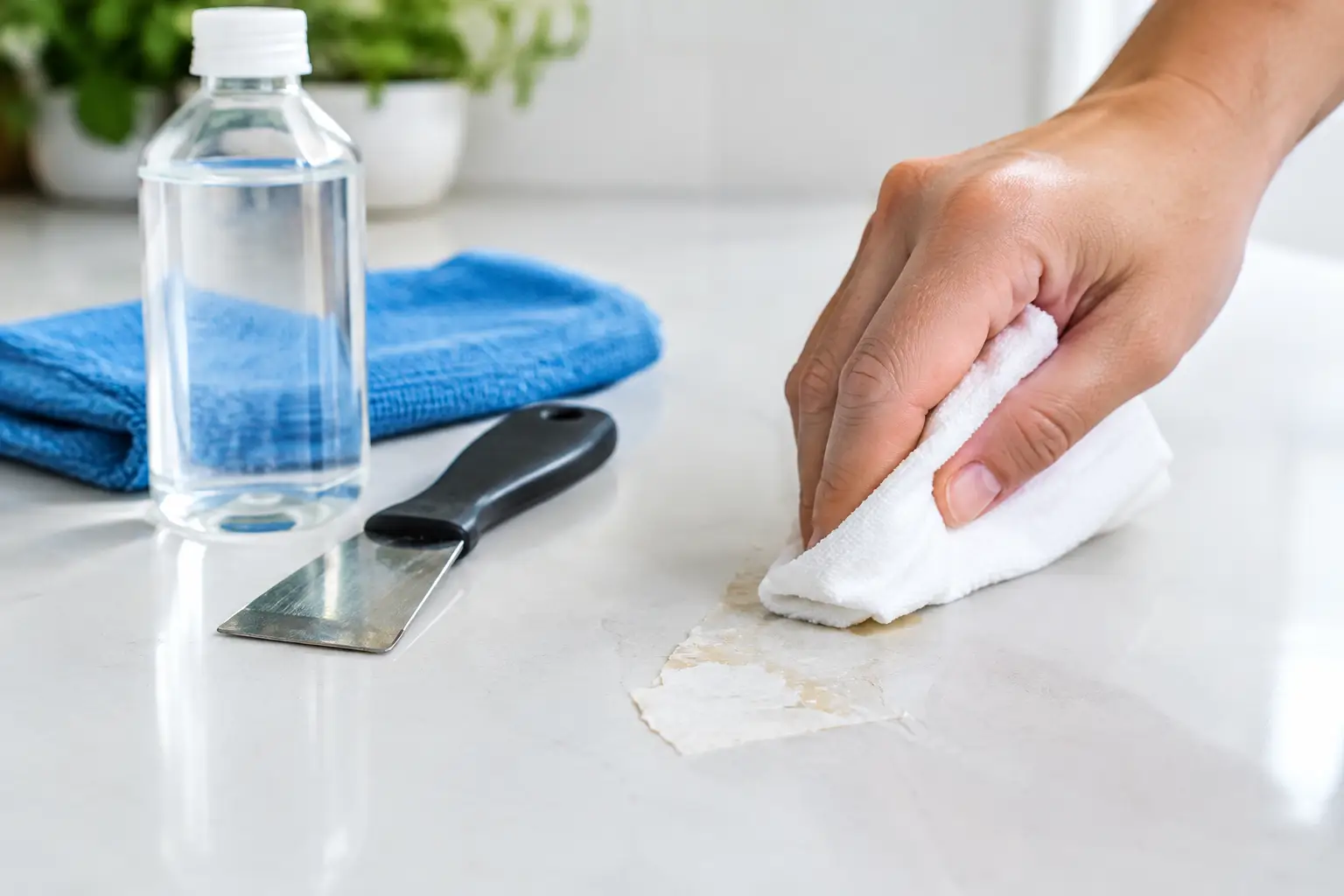
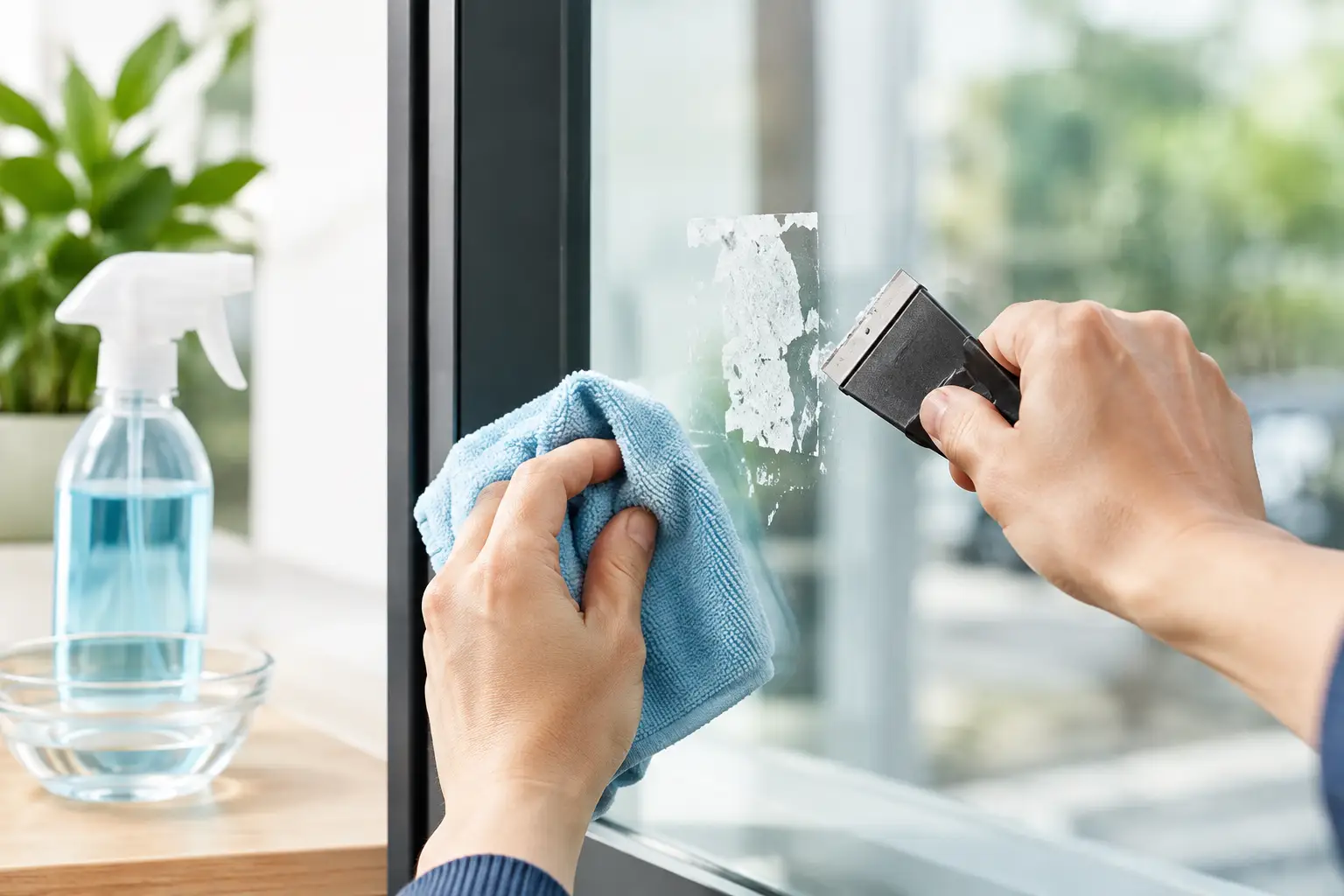
The word “solvent” can sound industrial, but the messes it handles are familiar. Adhesive residue is one of the best examples. Labels, packing tape, bumper stickers and old decals can leave behind a sticky film that collects dust and looks worse after every attempted scrub. Water may not touch it. Abrasive pads can scratch the surface. A purpose-built adhesive remover gives the residue time to soften so it can be wiped away instead of scraped away.
Grease requires the same kind of thinking. Fresh cooking grease, oily marks and mechanical grime respond differently depending on the surface. A countertop, a painted vehicle panel and a fabric seat should not be treated as though they are the same material. Start with the mildest effective option, allow a short dwell time when directed, and lift the loosened soil with a clean cloth.
Sap, wax and marker stains can also need more than soap and water. The goal is not to flood the area with cleaner. Apply enough product to work on the residue, then wipe in a controlled way. For thick buildup, repeat the process rather than attacking the surface with force.
A safer formula should still perform
There is a persistent idea that a cleaner must smell harsh to work hard. Anyone who has opened a powerful conventional solvent in a small room knows the smell people mean. But odour is not proof of performance. It is often simply proof that volatile ingredients are entering the air.
Modern cleaning chemistry can use naturally sourced and biodegradable ingredients to tackle difficult jobs with less offensive odour and less concern around everyday use. The formulation matters more than a single ingredient. It has to wet the residue, break its grip on the surface, suspend the mess and rinse or wipe away cleanly.
At BCM Biodegradable Solutions, that practical standard is the point: address the actual problem, whether it is a stubborn adhesive, a stain or a surface-care challenge, without defaulting to old-school petroleum-style solvents. A cleaner that is easier to use is more likely to be used properly, rather than sprayed excessively or abandoned because the fumes are overwhelming.
How to use nonflammable cleaning solvents well
Even a gentler, nonflammable product deserves a careful approach. The label is the first instruction, especially for contact time, dilution and suitable surfaces. Before treating a visible area, test an inconspicuous spot. This small step matters on painted finishes, clear plastics, vinyl, upholstery, laminate and coated surfaces, where cleaners can affect colour or sheen.
Use a clean, absorbent cloth rather than a rough rag that may transfer dirt back onto the surface. Apply the product to the cloth first when overspray could be a problem, such as around electronics, dashboards or finished wood. If the residue is stubborn, let the cleaner sit for the recommended time, then wipe gently from the outside of the mess toward the centre.
Ventilation is still a sensible habit. Nonflammable does not mean you should spray any cleaner into the air and breathe it in. Open a door or window when working indoors, particularly on large jobs. Wear gloves if you have sensitive skin or if the label calls for them, and wash your hands after cleanup.
For larger maintenance tasks, keep the work area organized. Remove rags when they become saturated, avoid leaving containers open, and store the product according to its instructions. These habits protect surfaces, reduce waste and make it easier to see whether the cleaning method is actually working.
Watch for the claims that matter
When comparing cleaning solvents, look beyond front-label promises. A useful product should clearly state what it is intended to remove and what surfaces it can be used on. If fire risk is a key concern, confirm the nonflammable claim in the product information instead of relying on vague phrases such as “safer” or “eco-friendly.”
Consider the complete experience as well: odour, residue, ease of wiping, skin-contact guidance, packaging and disposal instructions. Biodegradability is valuable, but it does not give anyone permission to pour unused cleaner into drains or onto the ground. Follow local disposal guidance and use only what the job requires.
Finally, be realistic about limits. Some aged adhesives, baked-on grease and unknown coatings may need repeated treatment or professional advice. More product and more scrubbing are not always the answer. Patience, a surface test and the correct purpose-built formula usually produce the better result.
A sticky mess should not force you to choose between getting the job done and making your space smell like a fuel depot. Keep a nonflammable, surface-appropriate cleaner on hand, and the next label, decal or greasy mark becomes a straightforward fix instead of a full-scale cleanup.