That sharp pool smell can cling to your skin long after the towel is hung up. Knowing how to wash pool chemicals from skin is not just about feeling fresh for the drive home. A good post-swim rinse helps remove chlorinated water, sweat, sunscreen, and the residue that can leave skin dry, tight, itchy, or smelling like the deep end.
For most swimmers, the fix is simple: rinse promptly, wash gently, and replenish moisture. But a direct splash of concentrated pool treatment chemicals is a different situation entirely. Here is how to tell the difference and what to do next.
Start With a Thorough Fresh-Water Rinse
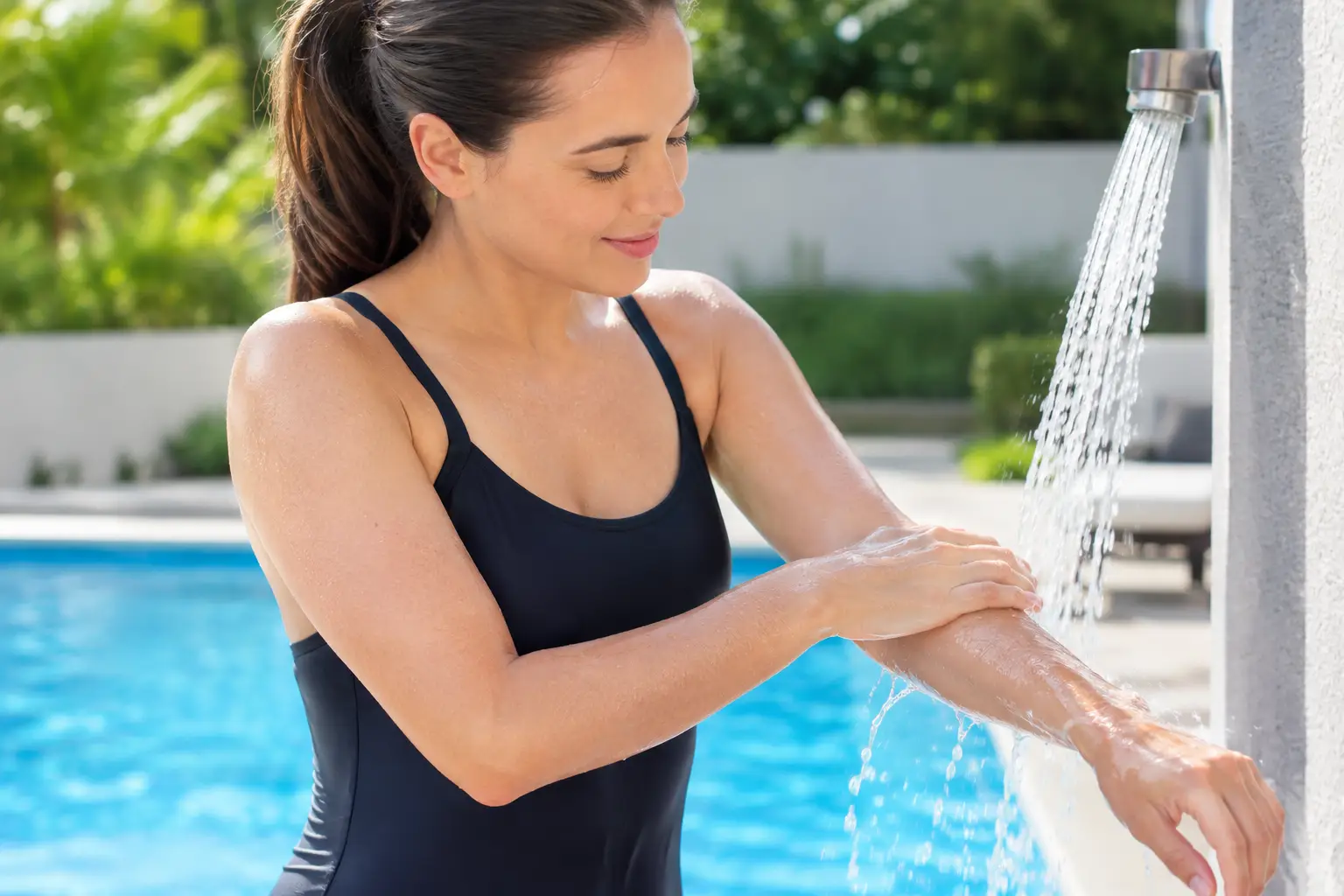
Get out of wet swimwear and rinse your body with fresh, lukewarm water as soon as practical. A quick splash is better than nothing, but a proper shower does more. Let the water run over your hair, face, neck, underarms, hands, feet, and anywhere a swimsuit has held pool water against the skin.
Lukewarm water is the sweet spot. Very hot water can make already-dry skin feel worse by stripping away more of its natural oils. If you are showering outdoors after a public swim, even a 30- to 60-second rinse before heading home can reduce the amount of chlorine residue sitting on your skin.
The familiar pool odour is not always simply “chlorine.” It can also come from chloramines, compounds formed as chlorine reacts with sweat, body oils, cosmetics, and other material in the water. That is one reason a clean, well-managed pool and a post-swim shower both matter.
Use a Gentle Cleanser, Not a Scrub Session
After rinsing, wash with a mild body wash or soap that is designed for skin. Use your hands or a soft washcloth, particularly around the hairline, behind the ears, between fingers and toes, and under the straps of a swimsuit. These are the places where water and residue tend to linger.
There is no prize for scrubbing harder. Rough exfoliating gloves, stiff brushes, and strongly perfumed soaps can turn a little post-pool dryness into real irritation. This is especially true for children, people with eczema, and anyone whose skin is already sensitive to fragrance or frequent washing.
For hair, shampoo after swimming when your scalp feels coated, your hair smells strongly of pool water, or you swim often. A gentle shampoo followed by conditioner can help reduce the dry, straw-like feeling that repeated pool exposure may cause. If your hair is colour-treated, curly, or particularly dry, a swim cap and a pre-swim fresh-water rinse can make a noticeable difference.
A Body Wash Made for the Post-Swim Job
Regular soap can clean skin, but some swimmers prefer a cleanser formulated specifically to tackle chlorine odour without an aggressive fragrance or harsh solvent feel. BCM Biodegradable Solutions’ Chlorine Zaprrr is made as a gentle body wash or shampoo for swimmers who want to wash away that persistent post-pool smell while being kinder to skin and hair.
Whatever cleanser you choose, follow its directions and rinse it off well. More product does not necessarily mean a better clean.
Moisturize While Skin Is Still Slightly Damp
Once you have towel-dried by patting rather than rubbing, apply a simple moisturizer. This is a small step with a big payoff for frequent swimmers, hot-tub users, lifeguards, and kids in swim lessons.
Look for a fragrance-free cream or lotion if your skin tends to react after swimming. The goal is to support the skin barrier after exposure to water and cleansing, not to cover up chlorine odour with a stronger scent. On very dry areas such as shins, hands, elbows, and feet, a richer cream may work better than a thin lotion.
If you develop redness, itching, or rough patches after nearly every swim, consider the full routine around the pool. Shower before and after swimming, change out of wet gear promptly, use a mild cleanser, moisturize, and avoid testing several new scented products at once. It may take a little trial and error to find what your skin tolerates best.
How to Wash Pool Chemicals From Skin After a Direct Splash
This is where the advice changes. Pool water that has been properly treated is one thing. Granular chlorine, shock products, liquid chlorine, algaecides, pH adjusters, and other concentrated products can cause burns or serious irritation. Treat direct contact with care.
If concentrated pool chemicals get on your skin, remove contaminated clothing, jewellery, and shoes right away if you can do so safely. Rinse the affected skin under a steady stream of cool or lukewarm running water for at least 15 minutes. Use plenty of water. Do not try to neutralize the chemical with vinegar, baking soda, another cleaner, or a homemade remedy. Mixing chemicals can create heat, fumes, or a worse reaction.
Do not scrub the area, and do not apply creams, oils, or ointments until you have received appropriate advice. Keep the product container or label nearby so health professionals can identify what was involved.
Call your local poison centre or seek urgent medical guidance for a concentrated chemical exposure, particularly if there is persistent pain, burning, blistering, spreading redness, numbness, or a large area of contact. Get emergency help immediately for trouble breathing, eye exposure, fainting, severe symptoms, or any situation involving a child and an unknown amount of chemical.
Do Not Forget Eyes, Swimwear, and Towels
Pool chemicals and chlorinated water do not stop at your skin. If pool water gets in your eyes and stings briefly, rinsing with clean water is usually a sensible first step. Remove contact lenses if they come out easily. If pain, redness, light sensitivity, blurred vision, or tearing continues, get medical attention. A direct splash of concentrated pool product in the eyes is an emergency: begin rinsing immediately and seek urgent help.
Rinse swimwear after every use, even if it seems clean. Chlorinated water can leave fabric smelling stale, fading faster, or feeling stiff over time. Turn suits inside out, rinse with cool fresh water, and wash according to the care label. Skip high heat when drying, since heat can be hard on elastic fibres.
Towels deserve attention too. A damp, chlorine-scented towel stuffed into a gym bag can develop a much worse smell by the next day. Hang it to dry or wash it promptly, especially after a long day at the pool or beach.
Make the Post-Swim Routine Easier
The best routine is the one your household will actually use. Keep a gentle cleanser, moisturizer, fresh towel, and clean change of clothes close to the shower or in a swim bag. For children, making the rinse-and-moisturize routine part of getting dressed can prevent the argument later, when itchy skin shows up at bedtime.
Frequent swimmers may also benefit from a few preventive habits. Showering before entering the pool helps remove sweat, lotions, and body oils. Drinking water supports overall comfort during a long swim session. Taking breaks from the water can help when skin is already feeling dry. And if a pool has an overpowering chemical smell, cloudy water, or causes eye and breathing irritation for several people, it may be time to leave the water and ask the operator about maintenance.
A clean shower after swimming should feel like a reset, not another harsh chemical encounter. Rinse well, cleanse gently, moisturize when needed, and treat any direct contact with concentrated pool products as the safety issue it is. Your skin has done enough laps for the day.